Precision Component Quality Inspection Solution

Precision Component Quality Inspection Solution

Background:

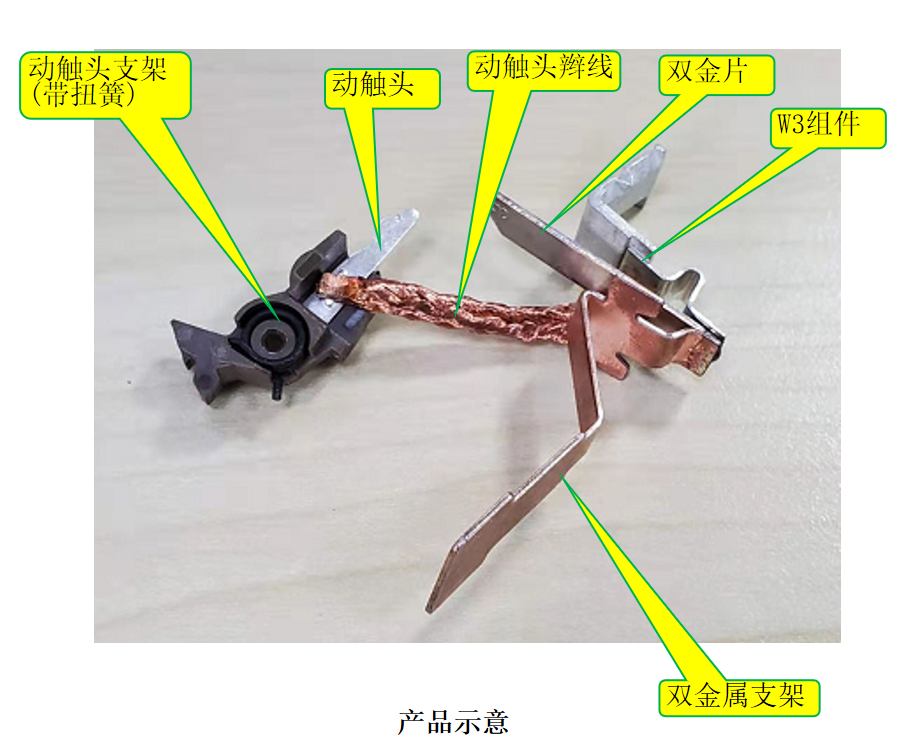
During the production of this electrical component, tiny defects such as missing springs, spacing deviations, welding slag residues, and braided wire position offsets may lead to component failure or even potential safety hazards. To meet the high-precision requirements of large-scale production, CKVision has developed a “full-scenario coverage + accurate identification” visual inspection solution for this electrical component, leveraging intelligent visual inspection to solve the challenges of manual quality inspection.


Station 1: Focus on 3 Key Inspection Items

Inspection Requirements:
  • Detect the presence of springs;
  • Inspect the gap between the moving contact and the bracket;
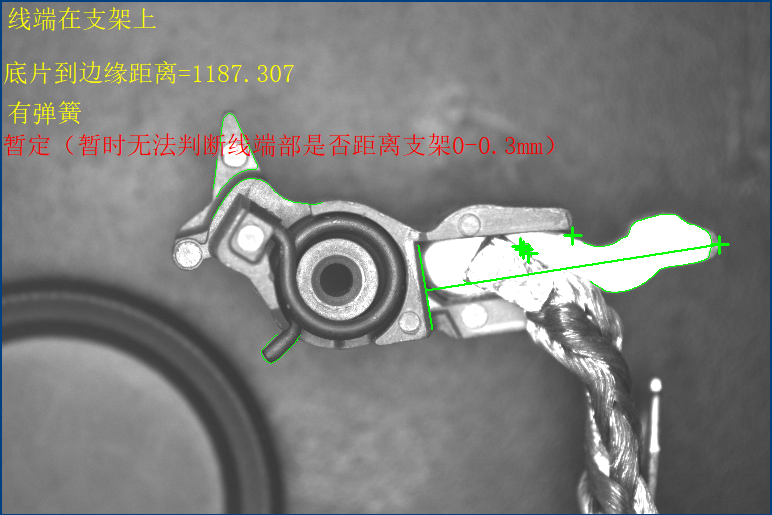
  • Verify that the braided wire is positioned on the boss of the moving contact.

Inspection Solution & Effects:

The system judges whether the spring is missing by identifying the characteristics of the spring head, determines if the moving contact is tightly clamped to the bracket by measuring the distance from the bright patch to the edge of the gap, and confirms the braided wire’s position on the moving contact boss through a dual-technology combination of shape matching and spot analysis. Even subtle gaps and position deviations cannot escape the system’s “sharp eyes”—the fastest single-item inspection takes only 0.676 milliseconds, far outperforming manual inspection in efficiency.


2. Stations 2 & 3: Specialized in Dual-Metal Component Inspection、
Inspection Solution & Effects:

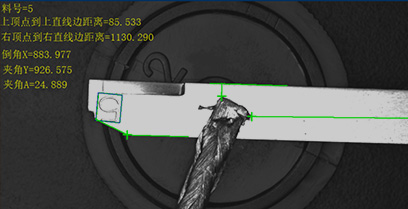
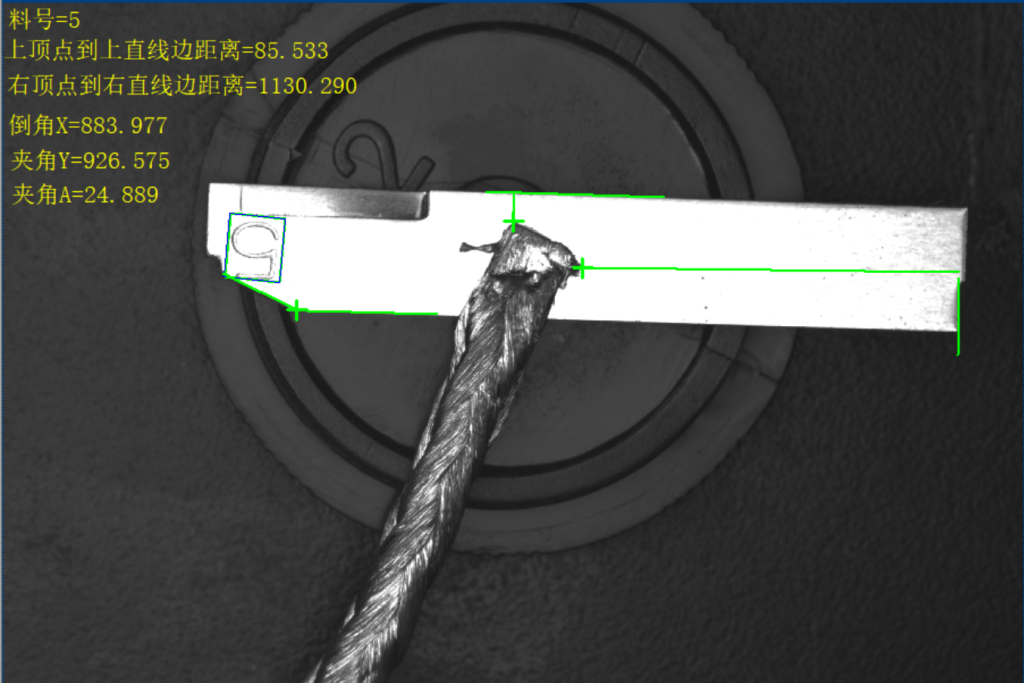
Station 2: Accurately identifies the dual-metal part number and chamfer position, strictly adheres to the 1.0-1.5mm spacing requirement between the braided wire head and the dual-metal edge, and precisely measures the heated length of the braided wire to avoid performance impacts caused by non-conforming parameters
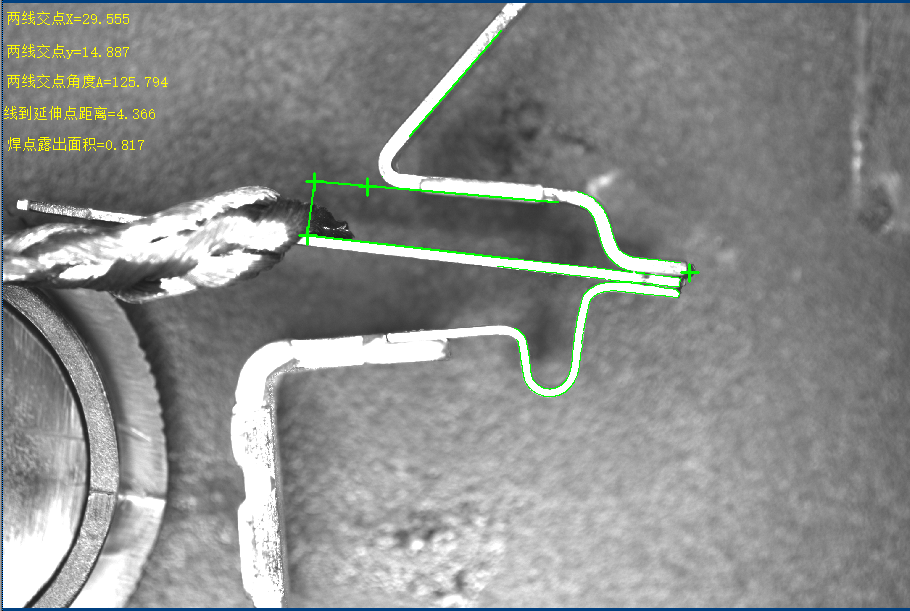
Station 3-01: Uses geometric calculation technology to first find the intersection point of the two edges of the bracket, then extends a specific distance to obtain the inspection point, and finally accurately calculates the distance from the point to the metal edge, achieving millimeter-level precision control.
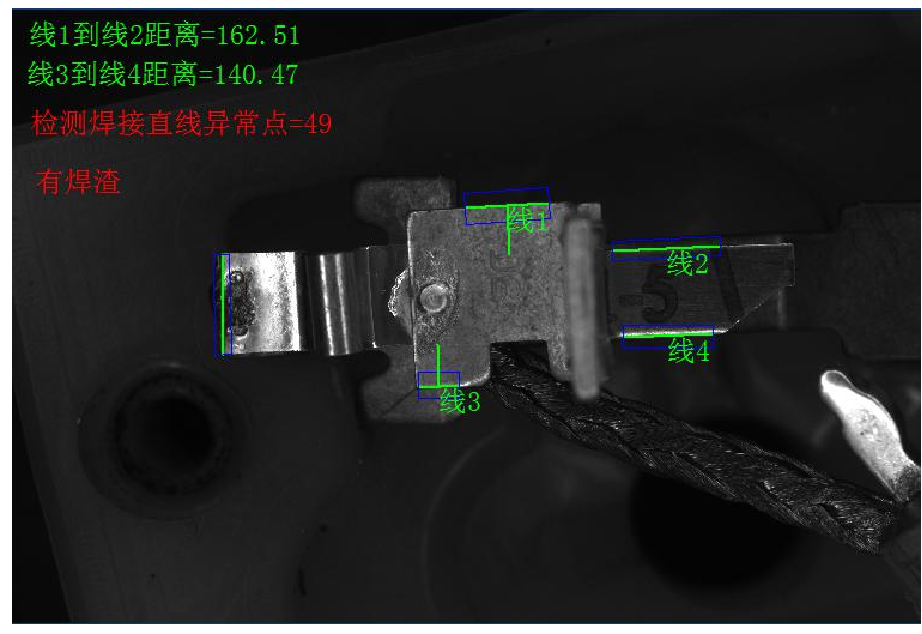
Station 3-02: Focuses on detecting welding slag presence, iron sheet offset, and product type differentiation. It quickly identifies defects by detecting abnormal points on the welding line and measuring line spacing.


3. Station 4: “Vision + Robot” Linkage
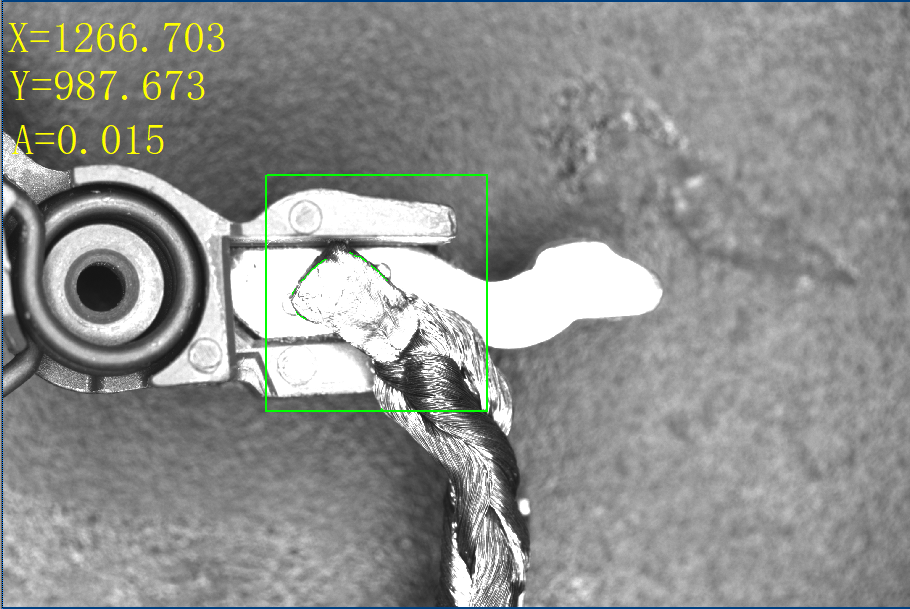
The system adopts infrared bar light sources and telecentric lenses to accurately identify the position and angle of the copper wire end, and transmits data to the robot in real time to guide automatic grasping and loading.

The entire solution features a modular design, allowing flexible configuration of supporting components according to actual needs—reducing equipment investment costs while ensuring inspection efficiency. From pre-solution design and hardware installation to post-software debugging and technical training, CKVision provides full-process intimate services, enabling enterprises to save time and effort.


Top